
Early Learning Overview
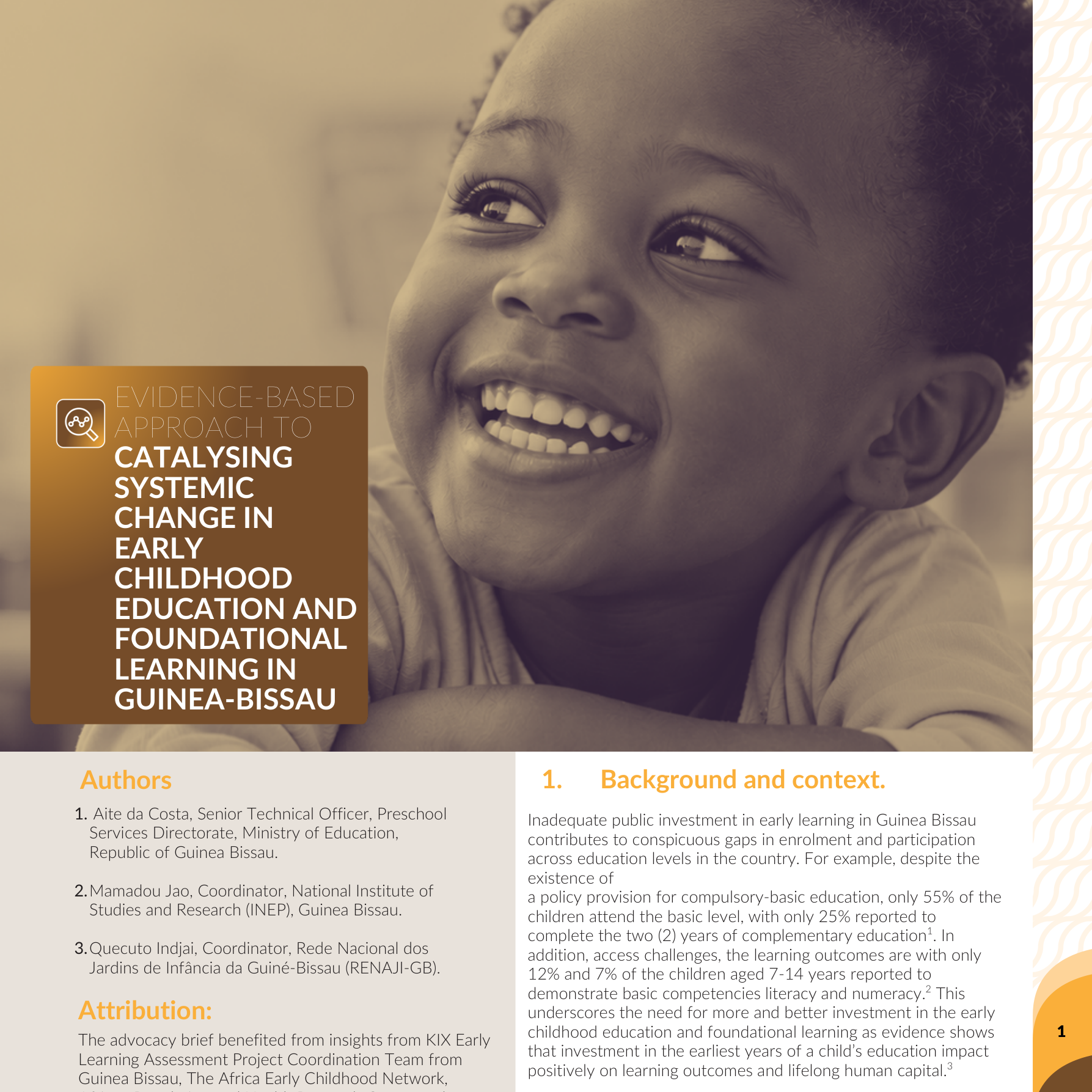
Catalysing Systemic Change in Early Childhood Education and Foundational Learning in Guinea-Bissau
A new advocacy brief from AfECN, Guinea-Bissau's Ministry of Education, INEP, RENAJI-GB, APHRC, and UNICEF WCARO highlights the urgent case for investment in early learning: despite a policy commitment to compulsory basic education, only 55% of children attend school and just 12% and 7% of children aged 7–14 demonstrate basic literacy and numeracy respectively, with preschool enrolment nationally at just 14.3%. As part of a GPE KIX-funded regional project, co-creation workshops held in May and June 2026 brought together 56 stakeholders — policymakers, teachers, and parents — to adapt three global early learning assessment tools (MELQO, ELA, and BEQI) to the Guinea-Bissau context, building local ownership, strengthening ties between the Ministry of Education and practitioners, and laying the groundwork to test and scale evidence-informed assessment models nationally to improve quality, equity, and school readiness.
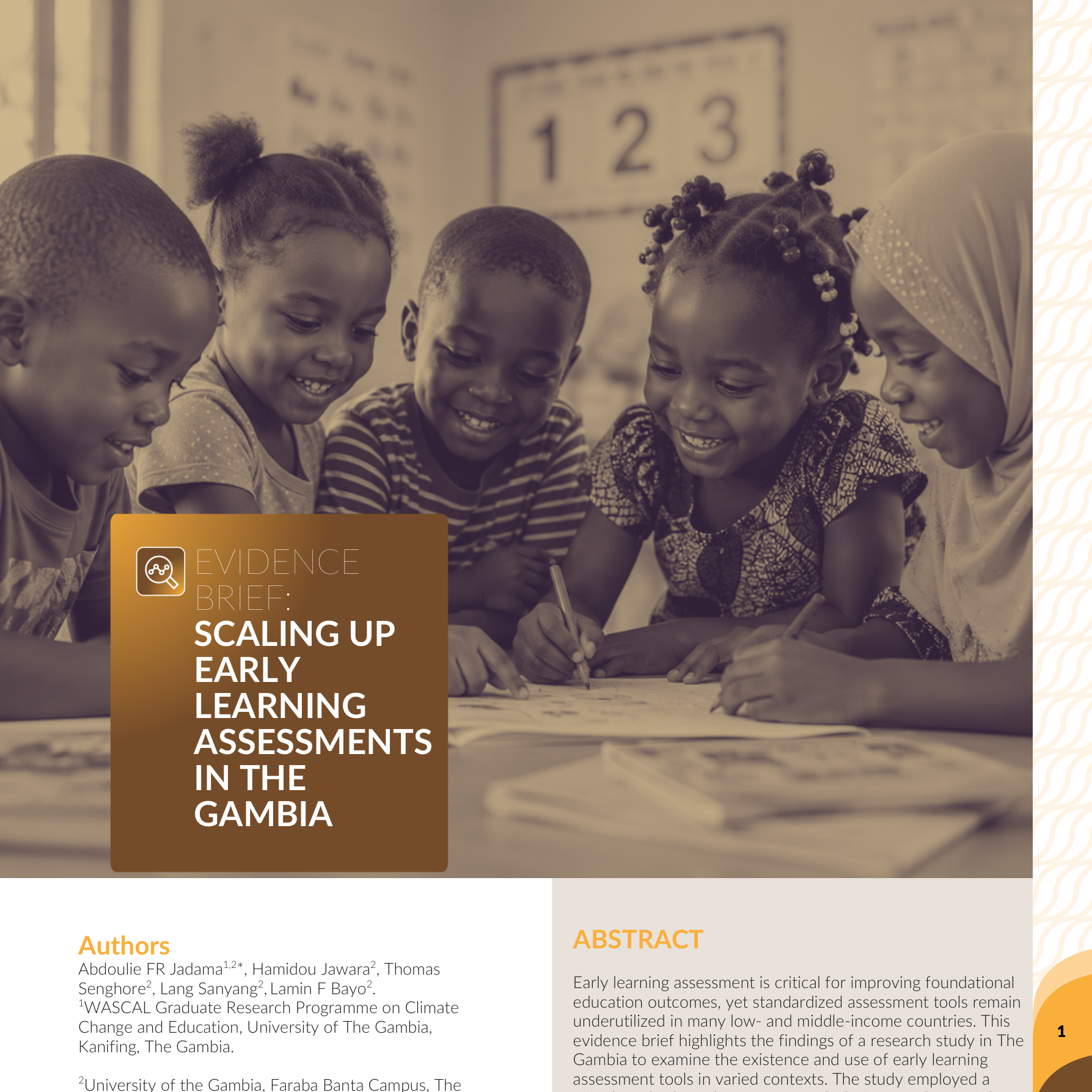
Scaling Up Early Learning Assessments in The Gambia
A new evidence brief from AfECN, the University of The Gambia, MoBSE, APHRC, and UNICEF WCARO reveals a critical gap in early childhood education: while Gambian teachers informally track how young children are developing, standardized tools for measuring early learning outcomes remain largely absent from classrooms. Drawing on 48 key informant interviews and 24 focus group discussions with education officials, teachers, and parents, the study found that despite existing national policy commitments, clear implementation guidelines, teacher training, assessment materials, and parent-teacher communication all fall short — and calls for a coordinated response spanning policy, capacity building, and equitable resourcing to strengthen how the country identifies and supports every child's foundational learning before primary school entry.
Read the full evidence brief for detailed findings and policy recommendations.
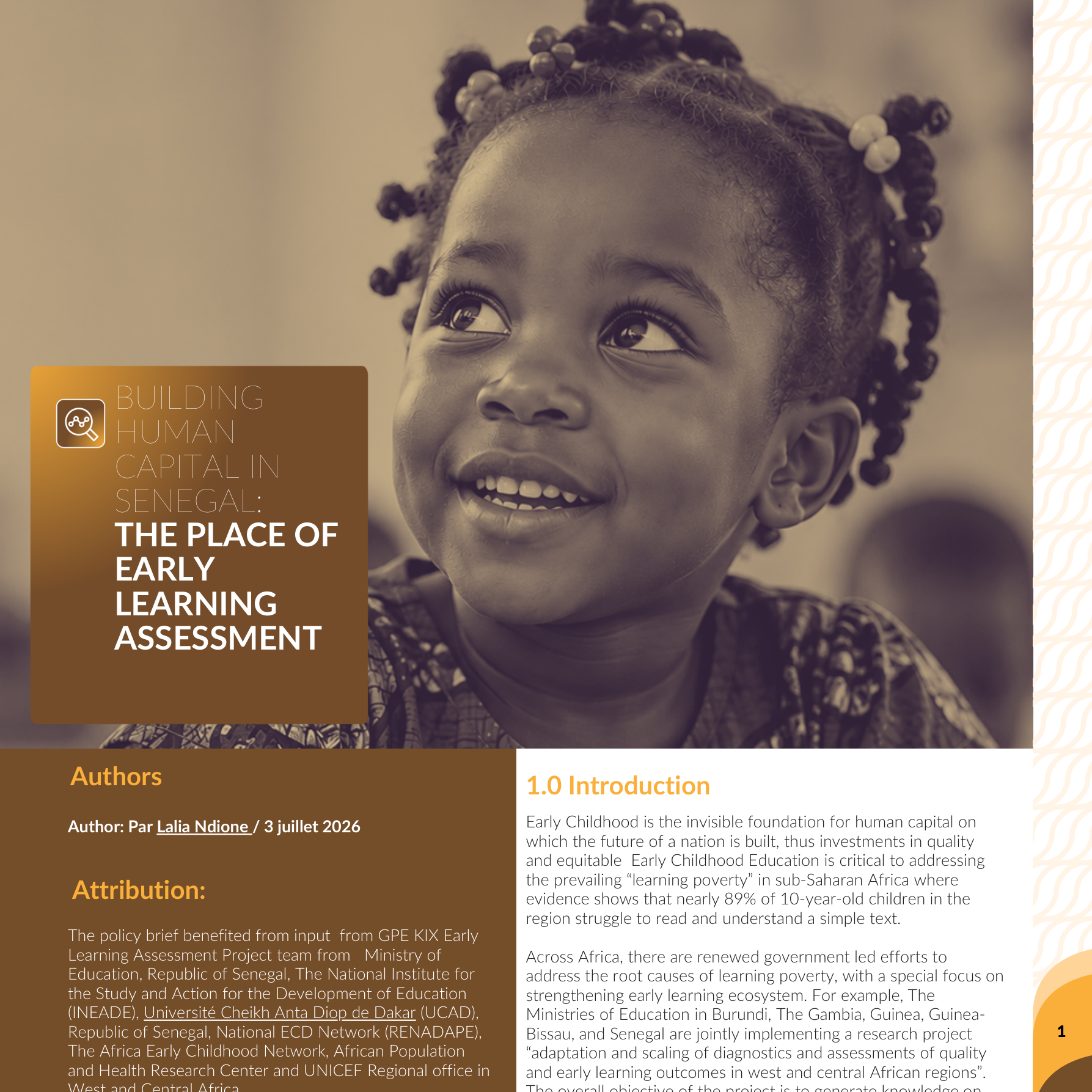
Building Human Capital in Senegal: The Place of Early Learning Assessment
A new policy brief by Lalia Ndione, drawing on the GPE KIX Early Learning Assessment Project with Senegal's Ministry of Education, INEADE, UCAD, RENADAPE, AfECN, APHRC, and UNICEF WCARO, examines a "quality paradox" at the heart of Senegal's rapidly expanding preschool sector: despite 344,469 children now enrolled across 5,116 institutions, preschool coverage remains at just 25.1%, and curriculum implementation lags at 45% of the required threshold, with basic numeracy skills the weakest area. The brief traces this to a fragmented early learning assessment system — tools that don't reflect Senegal's linguistic diversity, one-off rather than continuous monitoring, and under-resourced teachers — and recommends three strategic actions: mandatory continuous assessment training for teachers and principals, a multilingual and culturally relevant national assessment tool covering cognitive, health, and socio-emotional development, and stronger school-family-community partnerships to track each child's progress.
Insights from Field Testing of Adapted Early Learning Assessment Tools - Republic of Guinea
Preschool education in Guinea faces persistent challenges in terms of access and quality despite noticeable increase in enrollment and political will to strengthen this educational sector. Historically, the assessment of early learning outcomes and the quality of learning environment has suffered a lack of standardized and contextually appropriate tools. This gap constitutes a considerable hindrance to policymakers' ability to develop informed policies and effectively allocate resources to ensure a solid foundation for child development.