


How can Burundi know whether its youngest learners are ready for school? This evidence brief documents how the Ministry of National Education and Scientific Research and its partners adapted two international assessment tools, MELQO and ELA, to national early learning standards and translated them into Kirundi.
Are we adequately preparing young children for the transition to primary school?
A new fact sheet by the African Early Childhood Network (AfECN) presents key findings from an Early Learning Outcomes Assessment conducted in Senegal, offering important insights into children's school readiness and the quality of preschool learning environments. The assessment covered 240 children across 48 preschools in eight academic inspectorates, using adapted Measuring Early Learning and Quality Outcomes (MELQO) and Early Learning Assessment (ELA) tools. Read More…
Strengthening Early Learning Assessment in Senegal: Key Findings and Recommendations
How can we better understand and improve children's readiness for school? A new evidence brief by the African Early Childhood Network (AfECN), in collaboration with Senegal's Ministry of National Education, INEADE, APHRC and UNICEF WCARO, presents key findings from an early learning outcomes assessment conducted across 48 preschools in eight academic inspectorates, involving 240 children aged 5–6 years. Read More…
AfECN Launches Youth Champions Programme on ECD and Climate Change
The Africa Early Childhood Network (AfECN) has launched its Youth Champions Programme on Early Childhood Development (ECD) and Climate Change, bringing together 25 young advocates from Ghana, Liberia, Malawi, Zambia and Zanzibar. Climate pressures such as floods, droughts and extreme heat are increasingly affecting Africa's youngest children, yet ECD is still too often missing from climate conversations. Running from August 2026 to September 2027, the programme will equip Youth Champions to generate evidence with their communities and turn it into advocacy at national and regional levels.
"I joined because young people deserve a voice in shaping their future," says Khalfan Ali Rashid, a Youth Champion from Zanzibar. Follow AfECN for stories from the Champions and join us in amplifying young voices for climate-resilient early childhood development across Africa.
(CLOSED) CALL FOR PROPOSALS : Development of Culturally Relevant Early Childhood Development Resources Across Africa
This assignment is organised around four broad resource strands. Institutions may apply to work on one or more strands, depending on their technical expertise, institutional experience, geographic reach and access to relevant communities and cultural knowledge holders. Applicants should clearly identify the strand or strands for which they are applying and demonstrate appropriate expertise, partnerships and methodology for the selected area.
Proposals must be submitted by 30 September 2026 to proposals@afecn.org.
Requests for clarification may be sent to info@afecn.org.
Email subject line: Proposal – Development of Culturally Relevant ECD Resources Across Africa – [Institution Name]
Global Technical Financing Forum
This Global Technical Financing Forum will be co-hosted by the Government of Rwanda, the Africa Early Childhood Network (AfECN), UNESCO, UNICEF, and WHO, in support of the Act for Early Years campaign. We are inviting government representatives, influential leaders, investors, and development partners to gather for a practical, systems-focused discussion on how barriers to financing can be overcome and creative financing solutions can be applied to ensure children receive comprehensive services across sectors in their earliest years of life.
(closed) CALL FOR CONSULTANCY SERVICES: Development of a Continental Early Childhood Education and Development (ECED) Framework for Africa
(CLOSED)
TERMS OF REFERENCE (ToR)
Background and Rational: Early Childhood Education and Development (ECED) is widely recognized as the foundation for lifelong learning, human capital development, and socio-economic transformation. Evidence consistently demonstrates that investments in early childhood yield some of the highest returns in education systems, improving learning outcomes, health, social cohesion, and productivity throughout the life course. Across Africa, however, access to quality ECED services remains uneven. While several Member States have adopted national early childhood policies and programmes, significant disparities persist in access, quality, financing, teacher preparation, curriculum standards, and governance structures. Many countries also face challenges related to:
Fragmented policy frameworks and institutional coordination.
Insufficient investment and sustainable financing mechanisms.
Limited professional standards and training pathways for ECED educators.
Weak monitoring systems and data availability.
Inequities affecting children in rural areas, conflict-affected settings, and vulnerable communities.
The Continental Education Strategy for Africa (CESA 2026–2035) recognizes early childhood development as a critical entry point for improving foundational learning and strengthening education systems across the continent. In parallel, the AU Decade of Education and Skills Development (2025–2034) emphasizes building strong learning foundations and strengthening human capital development pathways across the life cycle. In this context, the African Union Commission (AUC), through the Department of Education, Science, Technology and Innovation (ESTI), in collaboration with the African Early Childhood Network (AfECN), seeks to develop a Continental Early Childhood Education and Development (ECED) Framework to guide Member States, Regional Economic Communities (RECs), and partners in strengthening early childhood systems across Africa.
The framework will provide continental policy guidance, standards, and strategic priorities to support Member States in designing and implementing integrated, inclusive, and high-quality ECED systems aligned with CESA 26–35 and Agenda 2063 aspirations.
To support this process, the African Union Commission seeks to engage a qualified consultant (or consultancy firm) to lead the development of the Continental ECED Framework through a consultative and evidence-based process.
Objective of the Consultancy: The overall objective of the consultancy is to develop a comprehensive Continental Early Childhood Education and Development (ECED) Framework for Africa that provides strategic guidance, standards, and implementation pathways to support Member States in strengthening early childhood education systems in alignment with CESA 2026–2035 and the AU Decade of Education and Skills Development (2025–2034).
Global Caregiver Forum 15 - 16 January 2026, CaixaForum, Madrid, Spain
Background
Scientists agree that loving care that makes a child feel loved and secure is a prerequisite for healthy cognitive, emotional, and social development, and the single most important factor for good mental health throughout life. Raising children is perhaps the most important task we undertake, but babies don't come with an instruction manual.
Main Objective
To develop a roadmap for Universal caregiver programs to all who need them worldwide. This event will lay the groundwork for a global summit and a potential United Nations General Assembly resolution on caregiver support.
Evidence-Based
More than four hundred randomized controlled trials, collected in a systematic review led by the WHO in 2022, demonstrate that evidence-based caregiver programs increase nurturing care, reduce maltreatment, and improve parents' mental health outcomes.
Strengthening Primary Health Care to Promote Early Childhood Development
During the first 1,000 days, young children and caregivers have a myriad of touchpoints within the health system. Leveraging these moments to promote nurturing care interventions that are not consistently emphasized in primary health care (PHC) — such as responsive caregiving, safety and security, and opportunities for early learning — can alter their developmental trajectories. This practical global resource aims to support national and sub-national planning for promoting young children’s development in PHC. It highlights opportunities to leverage primary health care platforms and provides concrete examples and guidance for delivering interventions that promote nurturing care for early childhood development.
Promoting nurturing care: How governments are uniting to strengthen ECD in PHC systems
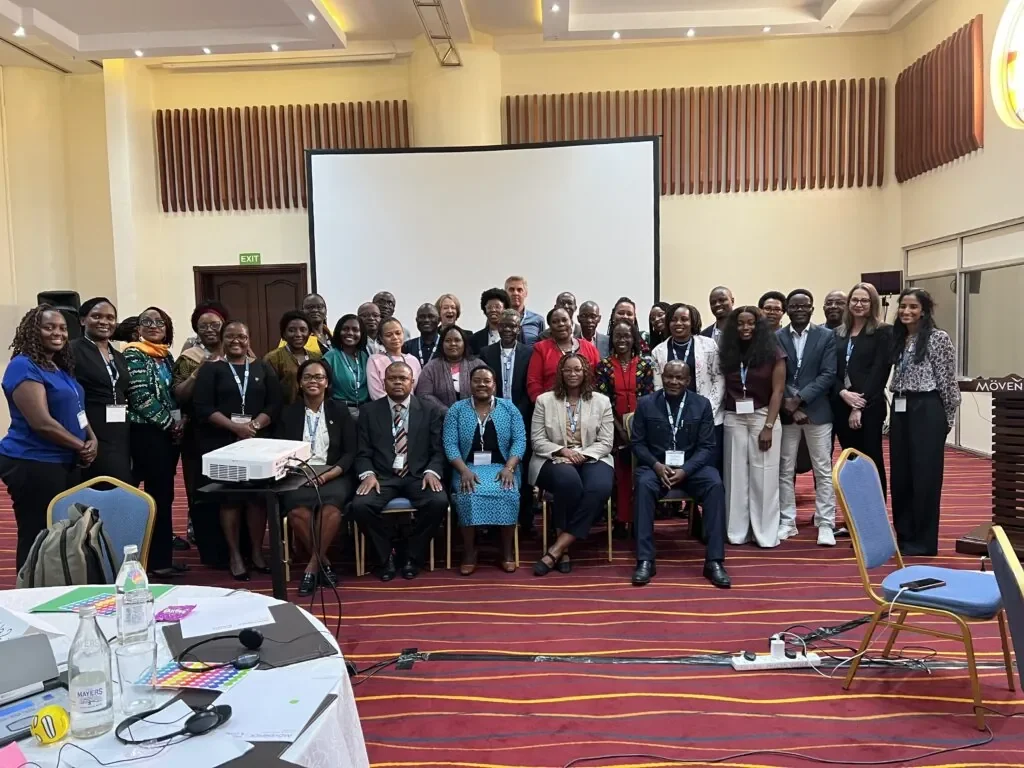
When health officials, civil society representatives and development partners convened in early October for a side event at the Conrad N. Hilton Foundation’s East & Southern Africa Early Childhood Development Partners’ Convening in Nairobi, there was a singular shared goal on everyone’s mind: Ensuring that responsive caregiving, early learning, safety and security, and development monitoring and counseling are prioritized and promoted at scale in primary health care (PHC) systems, alongside health and nutrition interventions.