
ECD and Climate Overview
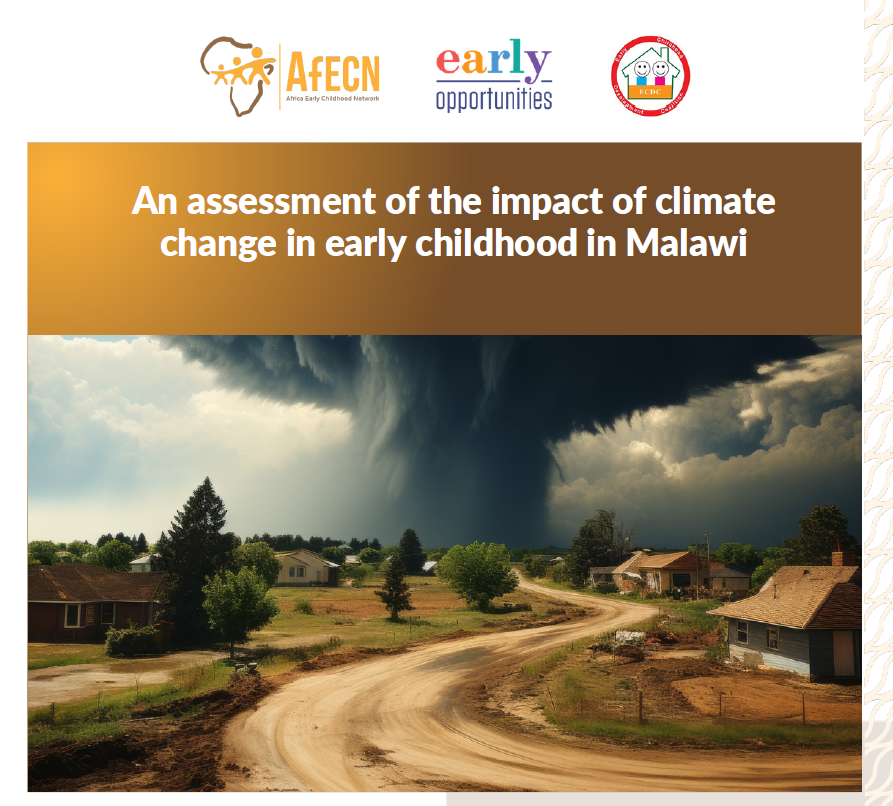
An assessment of the impact of climate change in early childhood in Malawi
The African Early Childhood Network (AfECN) has recently conducted surveys on the nexus of climate change and early childhood. This has enabled us to (i) undertake a robust and comprehensive analysis of the status of early childhood development (ECD) and climate change in the African region, and (ii) provide technical support to national ECD networks.
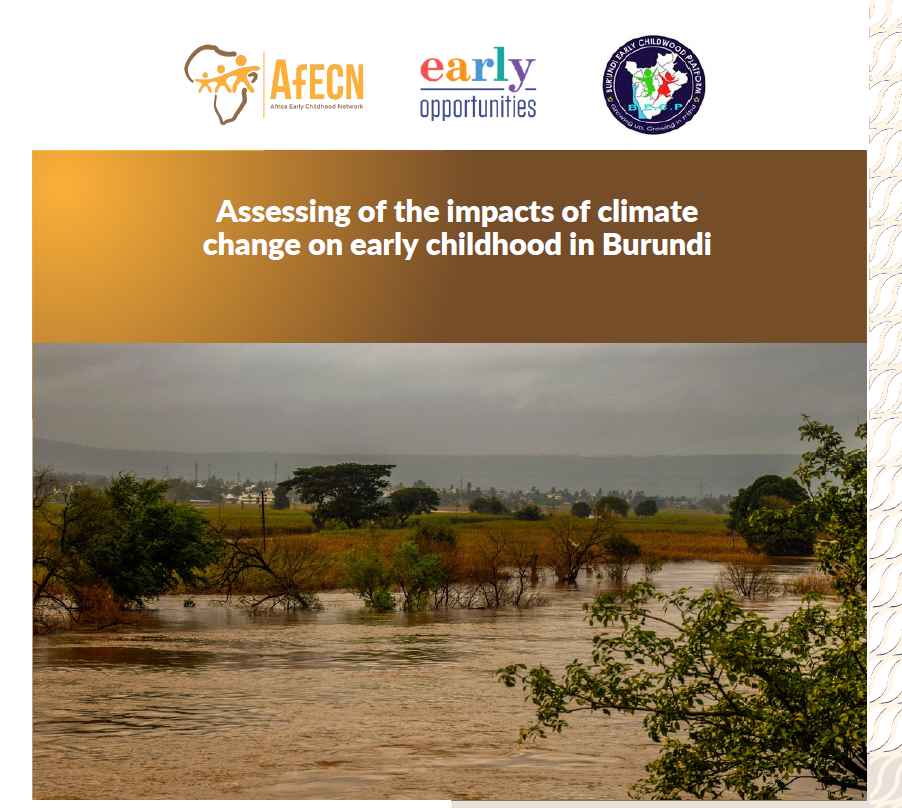
Assessing of the impacts of climate change on early childhood in Burundi
This micro research adopted a mixed method approach to evaluate the impact of climate change in early childhood, using both quantitative and qualitative data collection. In addition to literature review, data collection took place in 8 provinces: Kirundo, Muyinga, Cibitoke, Bubanza, Bujumbura (Mairie and Rural), Rumomge and Makamba. The data collection focused on households affected by climate change, women's representatives, educators, health workers, the communal administrator/representative, the communal agronomist / rural engineering technician, representatives of non-profit organizations, and local churches. Using in-person interviews and telephone interviews, the researchers engaged 1994 participants. The participants provided rich and diverse data to inform the findings of the current micro-research.
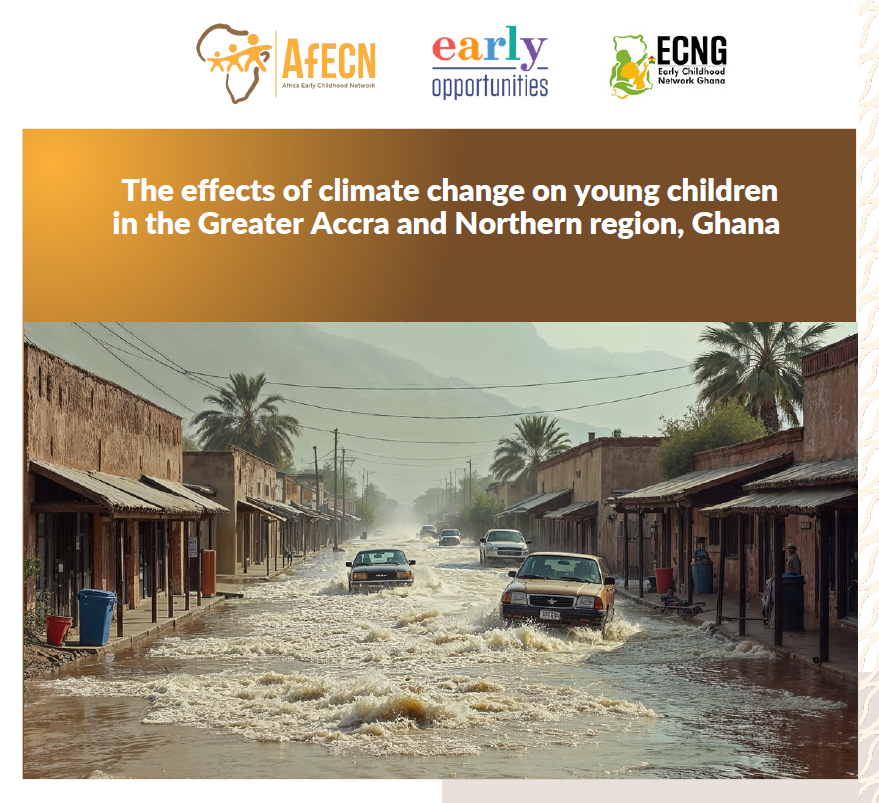
The effects of climate change on young children in the Greater Accra and Northern region, Ghana
The micro-research adopted a mixed and participatory approach. First, the researchers undertook a review of relevant literature ranging from reports, government policies and other relevant climate literature. This was complemented by primary data collection from the parents and caregivers of children under eight (8) years, early childhood educators, health workers and community leaders. The informants were from the Greater Accra and Northern regions. For the field survey, 253 respondents were reached whereas with Key Informant Interviews (KII) 224 respondents were engaged.