During the first 1,000 days, young children and caregivers have a myriad of touchpoints within the health system. Leveraging these moments to promote nurturing care interventions that are not consistently emphasized in primary health care (PHC) — such as responsive caregiving, safety and security, and opportunities for early learning — can alter their developmental trajectories. This practical global resource aims to support national and sub-national planning for promoting young children’s development in PHC. It highlights opportunities to leverage primary health care platforms and provides concrete examples and guidance for delivering interventions that promote nurturing care for early childhood development.
Promoting nurturing care: How governments are uniting to strengthen ECD in PHC systems
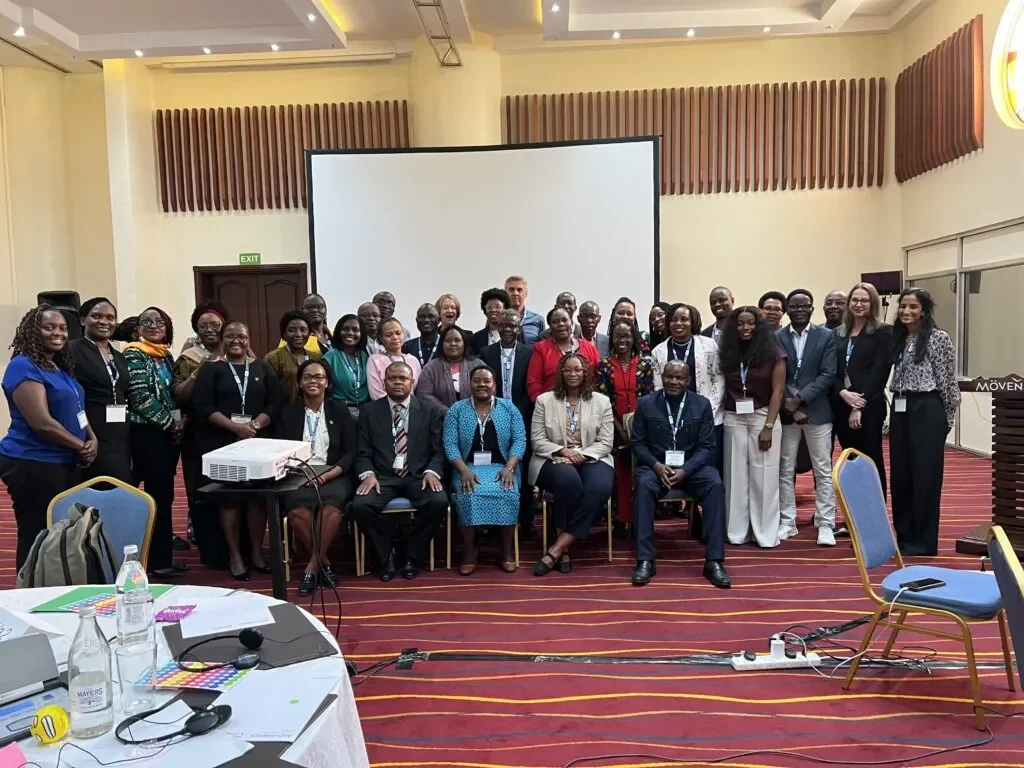
When health officials, civil society representatives and development partners convened in early October for a side event at the Conrad N. Hilton Foundation’s East & Southern Africa Early Childhood Development Partners’ Convening in Nairobi, there was a singular shared goal on everyone’s mind: Ensuring that responsive caregiving, early learning, safety and security, and development monitoring and counseling are prioritized and promoted at scale in primary health care (PHC) systems, alongside health and nutrition interventions.
ADAPTING AND SCALING EARLY LEARNING OUTCOMES ASSESSMENTS IN THE WEST AND CENTRAL AFRICAN REGION
The study provided a comprehensive overview of the existing assessment tools and indicators for early learning quality in sub-Saharan Africa. The review process adhered to the updated guidelines from the Joanna Briggs Institute (JBI) and followed Arksey and O'Malley’s five-step framework. The steps included first specifying the research question, followed by identifying relevant studies, selecting which studies to include, and then extracting, mapping, and charting the data. Finally, the results were collated, summarized, and reported. To ensure methodological rigor, the scoping review aligned with the Preferred Reporting Items for Systematic Review and Meta-Analysis Extensions for Scoping Reviews (PRISMA-ScR) guidelines. Furthermore, the screening of publications for eligibility was guided by the SOCT framework, ensuring a consistent application of inclusion and exclusion criteria throughout the review process.
Act For Early Years
AfECN is a member of the High-Level Advisory Group of the Act For Early Years campaign. This is a global movement working to ensure that every child has access to quality early childhood development, essential to thrive and achieve lifelong well-being. The campaign brings together governments, civil society, donors, businesses and advocates to prioritise investment in the early years as one of the most effective ways to break cycles of poverty and inequality and to build a more equitable world. Act For Early Years is supported by a broad coalition of partners including Theirworld, UNICEF, UNESCO, LEGO Foundation, Dubai Cares, Brookings Institution, ECDAN and many others.
AfECN is actively contributing to enhancing the visibility and uptake of the Act For Early Years campaign across Africa. The network leverages existing regional platforms to integrate the campaign’s key messages into discussions at major events across various sectors. AfECN is also collaborating with key stakeholders to strengthen country-level engagement and to mobilise youth champions for greater advocacy and action in early childhood development.
Find out more and join the campaign at www.actforearlyyears.org.
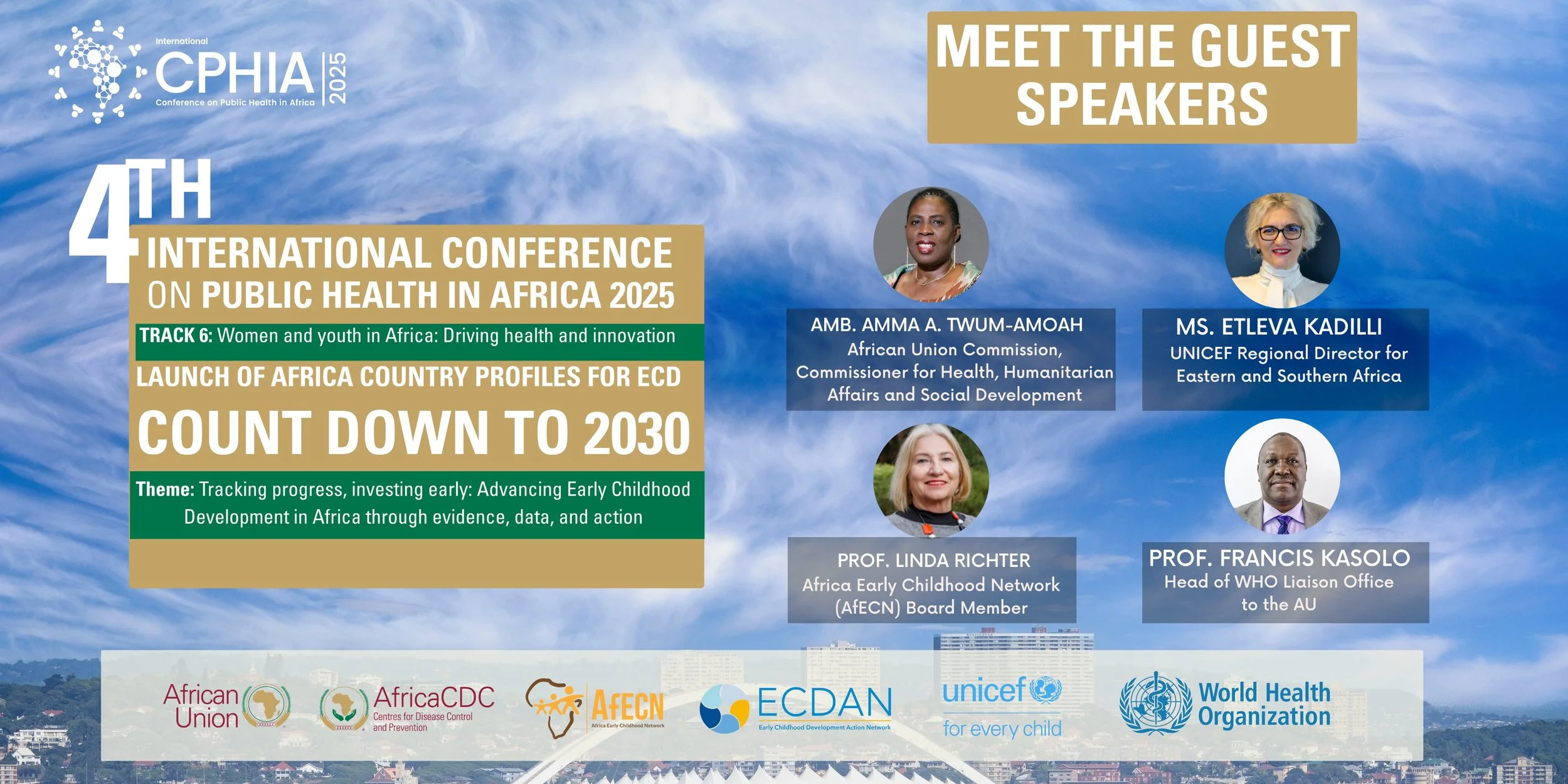
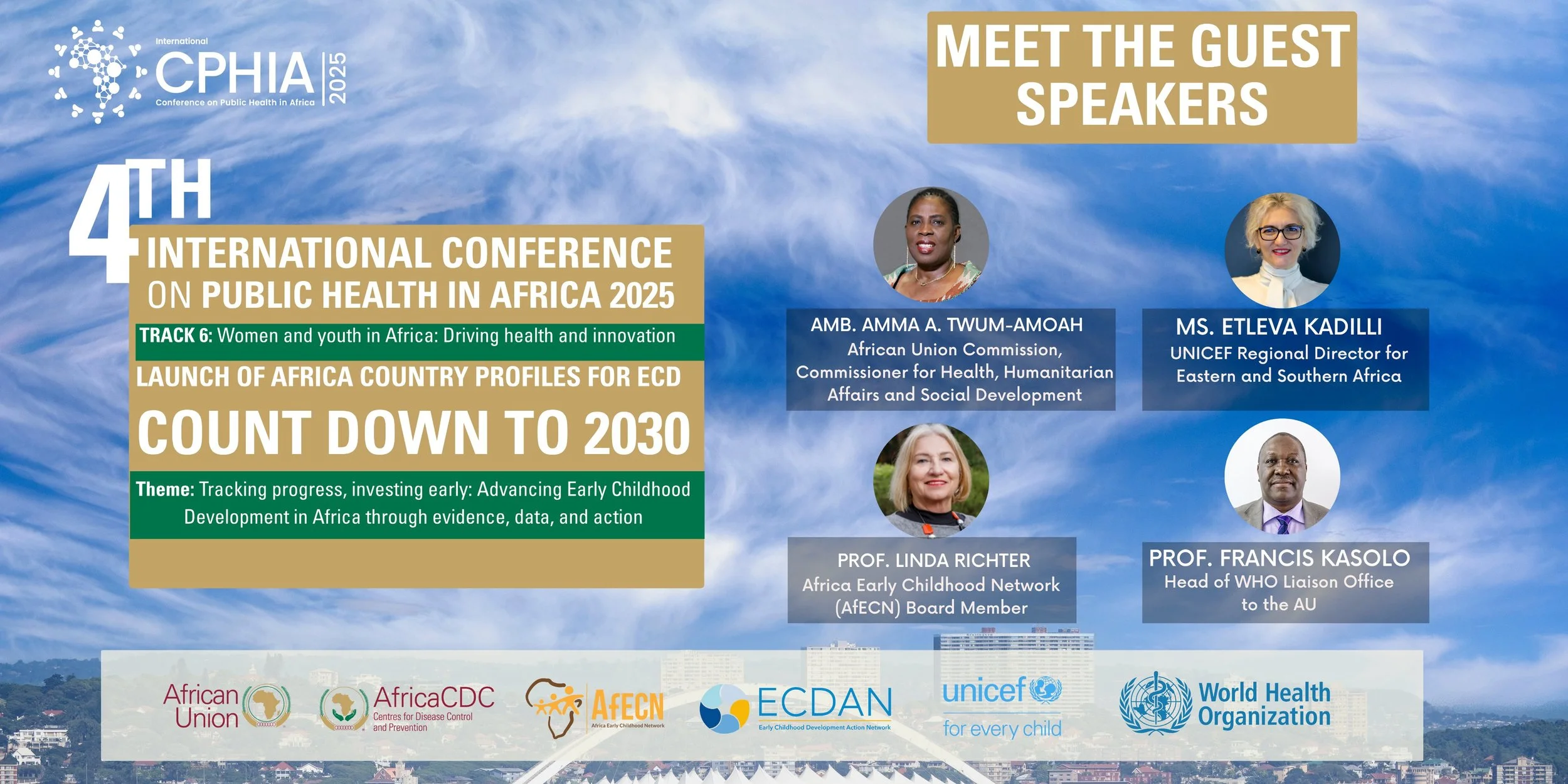
Launch of Africa Country Profiles for ECD Countdown To 2030
The African Union, The African Early Childhood Network, UNICEF, Early Childhood Development Action Network (ECDAN), and World Health Organization (WHO) will launch the Africa ECD Country Profiles Countdown to 2030 during #CPHIA2025.
the Africa ECD Country Profiles Countdown to 2030
CALL FOR EXPRESIONS OF INTEREST: Support for Early Childhood Development Advocacy Efforts
The Africa Early Childhood Network (AfECN) is dedicated to advancing early childhood development by empowering grassroots organizations, advocacy groups, and community-led networks to strengthen their advocacy efforts. This approach recognizes that sustainable change is most effective when driven by local actors who understand community needs, can mobilize support from the ground up, and hold decision-makers accountable to policies and investments that prioritize the wellbeing of young children.
As part of our commitment to strengthening advocacy for young children across Africa, we invite expressions of interest that align with the following thematic areas. Selected initiatives will contribute to evidence generation, capacity building, and policy influence in support of early childhood development (ECD):
Maternal Mental Wellbeing: The focus here is on initiatives that promote maternal mental health as a key advocacy issue—particularly during pregnancy and the early parenting period. This includes innovative models, community-driven programs, or research efforts that can inform policies, raise awareness, and mobilize support for integrating maternal wellbeing into national ECD agendas.
Scalable and Contextual Childcare Models: This area focuses on advocating for accessible, community-based childcare solutions that are adaptable to diverse African contexts. Projects should emphasize quality standards, workforce development, and demonstrate potential for influencing policy and investment in childcare systems.
Translation of Evidence into Policy Action: We seek initiatives that actively work to bridge the gap between research, programmatic learning, and policy influence in early childhood development. This includes efforts to package data and evidence into advocacy tools, develop policy briefs, organize evidence-sharing dialogues, and engage stakeholders in decision-making processes. Proposals should demonstrate how evidence is being used to influence policies, shift narratives, or inform strategic investments in ECD at local, national, or regional levels.
Strengthening Grassroots Networks for ECD Advocacy: We aim to support the growth and coordination of grassroots and community-led ECD networks that are actively engaged in advocacy. Expressions of interest should highlight efforts to build local capacity, foster collective action, and promote locally driven influence on national and regional ECD decision-making processes.
Proposal structure
The application should be a maximum of 5 pages containing the following components:
Description of the organization (Name, area of operation, contact person, type of organization and website or social media)
The definition and justification of the problem to be addressed including the community affected, the country and the geography of intended intervention.
The key objectives and expected outcomes
A detailed implementation plan including proposed activities, timelines and dissemination plans.
Organizational capacity and partnerships; briefly describe your experience in advocacy and/or ECD, and any existing partnerships relevant to the initiative.
A budget up to a maximum of USD 10,000
Eligibility criteria
These funds are intended for supporting grassroots advocacy efforts to raise awareness and looking to make a difference young child development in the Kenya, Tanzania, Mozambique, Senegal, Ghana and Nigeria
Applicants must be networks or advocacy groups, grassroots organizations, professional associations, registered women’s groups, or coalitions of ECD actors with demonstrable experience in the thematic areas outlined above.
Proven working experience in community-based interventions or promotion/outreach activities and/or other relevant activities related to early childhood development.
Evidence of strong partnership with local communities, local authorities and/or government agencies in previous activities
Be registered with a clear governance structure.
Have a secretariat that runs the day-to-day affairs.
Be based in either Kenya, Tanzania, Mozambique, Senegal, Ghana and Nigeria
Duration of the Award
The tenure of the seed grant will be for a duration of one year
Application Process
Send in your application with the subject line: “Advocacy Seed Grant 2025” by 1st September 2025 to the following email: seedgrants@afecn.org
You will be required to attach the following documents:
Cover letter stating how the grant aligns with your strategic plan and motivation for application.
Project proposal of not more than 5 pages including a detailed time and workplan.
Fill out and attach Appendix 1
Request for Proposals (RFP): Website Upgrade for the African Early Childhood Network (AfECN)
Issued by: African Early Childhood Network (AfECN)
Date: 20 February 2025
Submission Deadline: 7 March 2025
The African Early Childhood Network (AfECN) invites qualified vendors to submit proposals for the redesign and upgrade of its website. This project aims to enhance AfECN’s communication infrastructure to better serve its mission of advocating for equitable Early Childhood Development (ECD) policies and programs across Africa. The new website seeks to improve user experience and integrate new features including a central hub for knowledge sharing and enhanced stakeholder engagement.
Submit proposals electronically to careers@afecn.org by 7 March 2025.
Call for Expressions of Interest for Early Childhood Development Advocacy Groups/Networks